

Donald Trump had a cautionary message for Democrats.
In the near future he will determine what "opposition-supported departments" he would reduce and whether those reductions would be temporary or permanent.
He said the federal closure, which began on Tuesday, had afforded him an "unprecedented opportunity."
"Today I'm meeting with Russ Vought, known for his role in Project 2025," he posted on his Truth Social website on Thursday morning.
Linking to the 2025 Plan
Vought, the head of the federal budget office, may not be a household name.
But the 2025 initiative, a right-wing plan for governing put together mostly by previous administration figures like Vought when the Republicans were out of power, featured prominently during the recent election cycle.
The 900-page policy document contained suggestions for significant cuts in the federal bureaucracy, expanded presidential authority, rigorous immigration enforcement, a national prohibition on abortion and other components of an far-right social program.
It was often highlighted by the Democratic candidate the former vice president, as Trump's "dangerous plan" for the coming years if he was to win.
During the campaign, trying to calm undecided voters, the president attempted to separate himself from the proposal.
"I'm not familiar with the 2025 plan," the president stated in July 2024. "I disagree with certain aspects of their proposal and some of the things they're saying are absolutely ridiculous and terrible."
Shifting Approach
Currently, though, Trump is using the conservative blueprint as leverage to get Democrats to accept his spending requirements.
And he is holding up Vought, who authored a chapter on the use of executive power, as a sort of budgetary angel of death, ready to take a scythe to federal programs near and dear to the opposition party.
In case that particular metaphor wasn't clear, on Thursday night the president posted an AI-generated parody music video on Truth Social with the director depicted as the figure of death, accompanied by changed words of Blue Oyster Cult's Don't Fear the Reaper.
Political Reactions
In Congress, Republican leaders have echoed Trump's characterisation of the director as the administration enforcer.
"We don't control what he's going to do," Republican Senate Majority Leader the senator said. "This represents the danger of shutting down the government and transferring control to the budget director."
Senator Mike Lee of Utah told Fox News that Vought had been "preparing for this moment for many years."
This might be somewhat exaggerated, but Vought, who gained experience as a congressional staffer for Republican budget hawks and assisted in managing the lobbying arm of the Heritage Foundation, has extensive background examining the complexities of government spending.
The Bean-Counter Behind the President
He spent a year as the assistant head of the White House budget office during Trump's first term, rising to be its head in that year.
In contrast to numerous others who served with Trump during those first four years, Vought had staying power - and was promptly reappointed as director of OMB when Trump returned recently.
"A lot of those who didn't come back represent an old way of thinking," said a policy expert, a think tank official who, like Vought, began his career in conservative congressional budget circles.
"Russ was ahead of his time in the first term and right on time currently."
Although Vought isn't one to avoid controversial statements – he previously stated that he hoped to become "the individual who dismantles the bureaucratic establishment" – he doesn't exactly look the role of conservative villain.
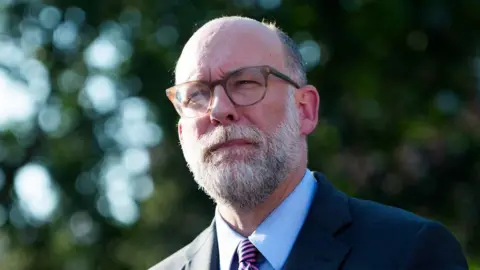
Balding and bespectacled, with a salt-and-pepper facial hair, the director's remarks generally feature the measured cadence of a bean-counter or professor.
He doesn't possess the intense stare and heated language of another advisor, another longtime Trump adviser who oversees White House immigration policy.
Seizing Opportunity in Shutdown
Currently the president has warned to deploy the director at a moment when, because of the legal limbo created by the government shutdown, their reductions could become more extensive and lasting than those implemented previously.
Ex-congressional leader the political veteran, a veteran of the big shutdown fights of the nineties, told NPR that Vought and his team have been preparing for precisely this situation while they were in the opposition period during the Biden years.
"They all knew a federal closure was possible," he said. "I believe they concluded from the beginning that you're only going to get the level of transformation they want if you're very tough and very determined and every chance you get, you take the opportunity."
The advantage this shutdown presents for budget-cutters like Vought is that, lacking legislative authorization, the government is operating in a legal grey area with reduced spending constraints.
The White House can, theoretically, slash funding and staffing deeper than it could earlier in the year, when expenditures followed standard funding levels.
And while job eliminations would still have to abide by a two-month warning, Vought could start that clock ticking whenever he, and the president, so choose.
Current Actions and Future Battles
Vought already has announced major infrastructure projects in New York City and Chicago are on hold, referring to required a review of questionable employment policies - a examination that he said can't take place during the closure.
He's also cancelled nearly $8bn in renewable energy initiatives across multiple states, all of which backed the Democratic candidate, Trump's opponent, in last year's presidential race.
Democrats and federal worker unions have promised to fight these reductions in the legal system and stated that Trump is making mostly bluffs to try to pressure them into abandoning the fight.
Numerous financial experts have pointed out that the White House reductions have been paired with other spending-increasing measures, which could weaken their criticism on the opposition for being the party of fiscal irresponsibility.
"Republicans are increasing spending in other areas and reducing revenue at the identical period," Brett House, an economics professor at the Columbia University School of Business noted.
"The notion that they're committed to fiscal prudence is not supported by their actions."
Political Risks
Some Republicans in Congress have voiced worry that the apparent glee with which the president is promoting director-mandated reductions could turn public opinion against them if the shutdown stretches on.
Republicans have been warning of the dire consequences of the closure on public operations - part of a concerted effort to portray Democrats as the responsible party.
Engaging in this while applauding the methods the administration is slashing programmes could undermine that approach.
"Russ is less politically in tune than his boss," The legislator the senator, a participant in the efficiency group, told the news website Semafor.
"We, as Republicans have never had so much ethical advantage on a spending measure in our lives… I don't understand why we would squander it, which I think is the risk of being aggressive with executive power in the current situation."
Thom Tills, a legislator who has decided against campaigning for re-election next year, cautions that government representatives "need to be really careful" in how they present any new cuts.
The Doge-directed layoffs and programme cuts were largely unpopular, according to public-opinion surveys, negatively affecting the leader's popularity.
A reprise of that could be risky.
According to Stern, however, the administration, and the director, may view the long-term benefits as well worth the short-term challenges.
"For Russ, for myself, for anybody who's in the budget space, the nation faces financial crisis,"

